Rural Swordsman
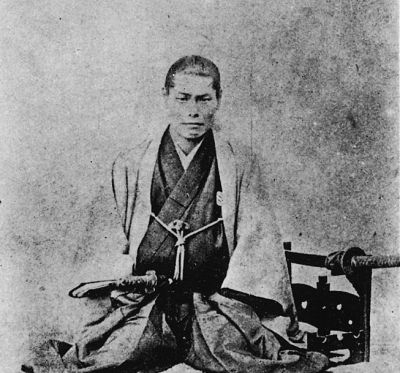
Rural swordsmen of Japan's late Edo period challenge the familiar perception that formal Japanese swordsmanship belonged exclusively to the hereditary samurai class. Throughout the countryside, farmers, village leaders, and other members of rural communities pursued martial training, contributing to the preservation and transmission of established Japanese sword traditions.
In Musashi Province, near present-day Tokyo, prosperous farming families supported martial instruction by providing training spaces and inviting experienced swordsmen to teach. These networks connected practitioners across villages, allowing individuals outside traditional warrior households to develop considerable martial proficiency.
Among the best-known examples is Kondō Isami (1834–1868), born Miyagawa Katsugorō into a farming family. His father arranged instruction in Tennen Rishin-ryū, a traditional Japanese martial school, using the family property as a training location. Kondō's dedication eventually led to his adoption into the Kondō family and his succession as the school's fourth-generation headmaster in 1861.
Other rural practitioners, including Kojima Shikanosuke, a village headman and student of Tennen Rishin-ryū, helped sustain these martial networks. Their participation demonstrates that formal Japanese swordsmanship extended beyond hereditary warriors and the military establishments of feudal domains.
Although Kondō later became commander of the Shinsengumi and attained samurai standing, his early experiences reflect a broader martial culture in which serious training could cross inherited social boundaries. These rural swordsmen remind us that mastery of the Japanese sword was not determined solely by birth or social position.
At Santō Ichi-ryū, LLC ©, we recognize this heritage through our commitment to discipline, perseverance, and respect. The history of Japan's rural swordsmen encourages us to appreciate the dedication of those who pursued martial excellence beyond established social distinctions and to carry those values into our own training.