Beyond the Samurai
Onna-musha
Non-native retainers
Non-native retainers
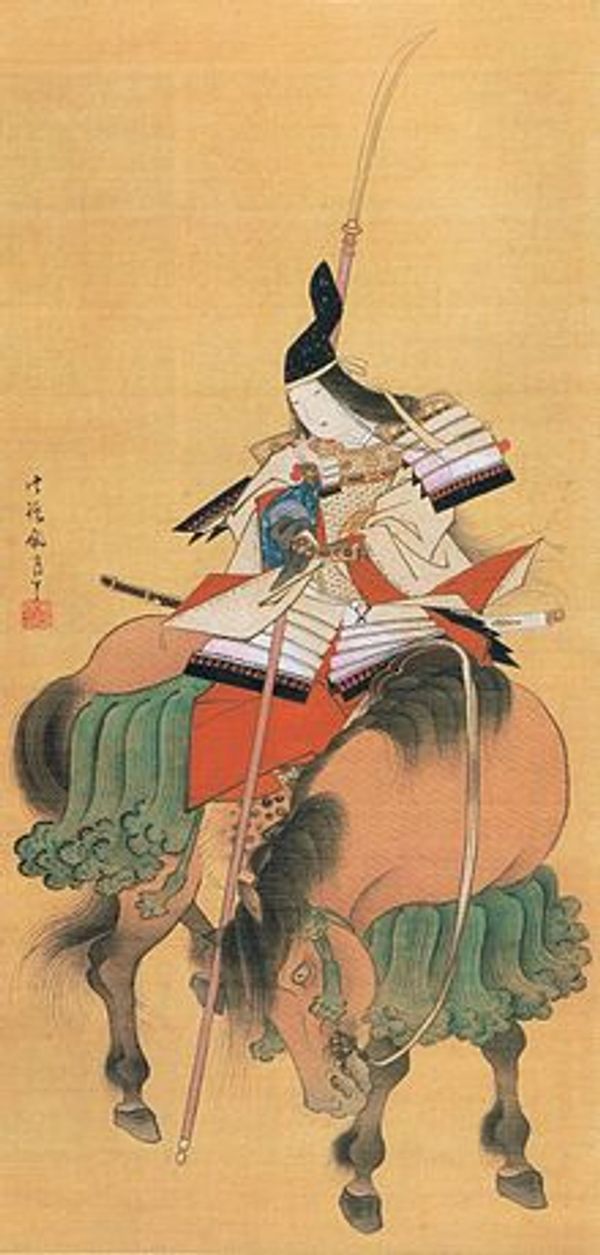
Onna-musha, women warriors of premodern Japan, challenge the familiar image of Japanese warfare as an exclusively male domain. Their accounts reveal a broader martial heritage, encompassing women remembered for their courage, skill, and resolve. Among the best-known is Tomoe Gozen, celebrated in The Tale of the Heike for serving alongside Minamoto no Yoshinaka during the Genpei War (1180–1185).
The epic portrays her as an exceptional archer, swordswoman, and horsewoman whose courage matched that of formidable opponents. Although the historical details of her life remain uncertain, her literary legacy has made her an enduring symbol of female martial prowess. “Gozen” is an honorific, often rendered as “Lady,” rather than a personal name.
Hangaku Gozen appears in the historical chronicle Azuma Kagami, which records her participation in an uprising against the Kamakura shogunate in 1201. Fighting alongside members of the Jō family, she helped defend their stronghold in Echigo Province. Remembered especially for her archery, Hangaku continued resisting until she was wounded and captured. These accounts come to us through different sources, blending martial history, literature, and remembrance. Together, they broaden our understanding of women’s place in Japan’s warrior traditions.
At Santō Ichi-ryū, LLC ©, we honor this heritage by approaching our own practice with discipline, perseverance, and respect. The stories of Tomoe and Hangaku invite us to recognize martial dedication across genders and to carry those qualities into our training.
Non-native retainers
Non-native retainers
Non-native retainers

Japan’s warrior history includes foreign-born individuals who entered the service of Japanese lords. Although their circumstances and responsibilities varied, their stories reveal connections across cultures and broaden our understanding of the people who participated in Japan’s martial world.
One notable example is Yasuke, an African man who arrived in Japan in 1579 accompanying the Jesuit missionary Alessandro Valignano. His precise birthplace and early life remain uncertain. In 1581, he entered the service of Oda Nobunaga, becoming a member of his household and carrying his weapons.
In 1582, Yasuke was with Nobunaga during the Honnō-ji incident, when forces led by Akechi Mitsuhide attacked his lord. Following Nobunaga’s death, Yasuke fought in the service of Nobunaga’s son, Oda Nobutada, before being captured. His subsequent fate remains unknown.
Although the surviving records offer only glimpses of Yasuke’s life, they preserve a remarkable example of cross-cultural service in late 16th-century Japan.
At Santō Ichi-ryū, LLC ©, his story encourages us to study martial history with curiosity and respect, recognizing contributions from people of different origins while cultivating dedication and discipline in our own practice.

Yamabushi
Yamabushi are Japanese mountain ascetics associated with Shugendō, a religious tradition that combines mountain worship, esoteric Buddhism, Shinto traditions, and Taoist influences. Through pilgrimage, prayer, meditation, and demanding physical practices, they pursue spiritual development and a deeper relationship with the natural world. Their distinctive clothing, small ritual caps, and conch-shell trumpets are recognizable features of the tradition.
Although yamabushi sometimes appear in Japan’s warrior narratives, they should not be equated with sōhei, commonly called warrior monks. Mountain asceticism was fundamentally a religious pursuit, and its practitioners held varied roles within Japanese society.
One of the best-known figures associated with the yamabushi image is Musashibō Benkei, the celebrated companion of Minamoto no Yoshitsune. In literature and art, Benkei embodies extraordinary strength, courage, and loyalty. According to legend, he made his final stand at Koromogawa in 1189, holding off attackers while Yoshitsune faced his death. His story remains an enduring part of Japan’s cultural imagination, though many familiar details belong to later storytelling rather than securely documented history.
Yamabushi continue to practice today, preserving living traditions of mountain pilgrimage, ritual, and spiritual discipline. Their example offers a perspective on perseverance, humility, and the relationship between physical effort and inner development; themes that can also invite reflection within martial arts practice.